Interpretable AI · Language Evaluation · Computational Biology

Ramya Nischala Akula, Ph.D.

AI Research Scientist

Building interpretable and evaluation-driven machine-learning methods for complex scientific and human-centered problems.

My research connects methodological machine learning with consequential applications. I have developed interpretable models for figurative-language understanding, proposed a semantic evaluation metric for text summarization, and built reproducible single-cell analysis workflows for lung-aging research. Across these areas, I focus on making computational methods more transparent, measurable, and scientifically useful.

U.S. PatentInterpretable self-attention architecture
DARPA Forward RiserResearch recognition, 2022
Peer-Reviewed ResearchAI, NLP, social computing, and biomedicine
Cross-Sector ExperienceAcademia, healthcare, and enterprise engineering
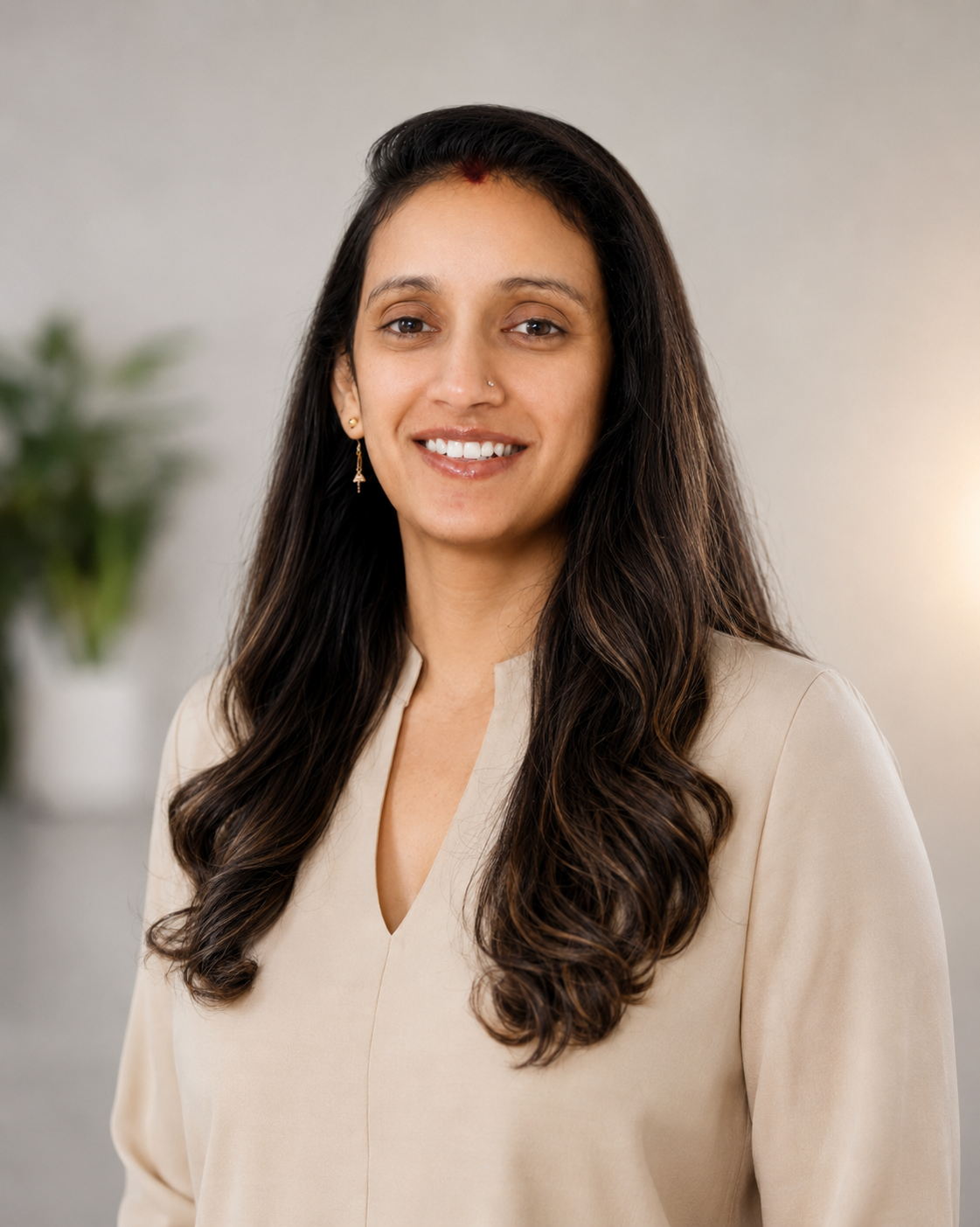
Portrait of Ramya Nischala Akula

Research identity

From interpretable language systems to computational discovery

My work is unified by a central question: how can machine-learning systems produce evidence that people can inspect, evaluate, and use? In natural language processing, this has meant designing interpretable architectures and semantic evaluation methods. In computational biology, it has meant constructing reproducible analytical workflows that connect high-dimensional data to biologically meaningful questions.

Selected research contributions

Original work, supporting evidence, and impact

Each contribution below is presented with the problem addressed, the specific technical contribution, and independently verifiable research outputs.

Contribution 01

Interpretable self-attention for sarcasm detection

An interpretable multi-head self-attention architecture designed to identify cues associated with sarcasm and figurative-language ambiguity in social-media text.

Research problem

Sarcasm can invert literal meaning, creating difficulty for language-understanding and social-media analysis systems.

Technical contribution

Developed an attention-based architecture that combines predictive performance with interpretable attention patterns.

Research output

Published in Entropy in 2021 and selected as an Editor’s Choice article.

External validation

Associated work received U.S. Patent 12,210,833 and DARPA Forward Riser recognition.

Contribution 02

SPEED Score for semantic text-summarization evaluation

A sentence-pair-embedding-based metric for evaluating abstractive and extractive summaries beyond surface-level word overlap.

Research problem

Traditional metrics such as ROUGE and BLEU can miss semantic equivalence when generated text differs lexically from a reference.

Technical contribution

Proposed using transformer models trained on sentence-pair tasks to compute semantic similarity between generated and reference summaries.

Evaluation

Compared the metric with established approaches on summarization benchmarks, including SummEval.

Research output

Published in the Proceedings of the Thirteenth Language Resources and Evaluation Conference, LREC 2022.

Contribution 03

Reproducible single-cell analysis for lung aging and disease

Computational workflows for integrating heterogeneous single-cell RNA-sequencing cohorts and investigating cell-type-specific variation in human and mouse lung tissue.

Scientific context

Multi-cohort lung datasets contain substantial biological and technical heterogeneity across donor status, age, injury, treatment, and experimental batch.

Computational contribution

Built workflows spanning quality control, Harmony-based integration, cell-type annotation, differential expression, and pathway-level interpretation.

Collaborative role

Translated pulmonary research questions into analytical plans, interpretable visualizations, and publication-ready findings.

Research output

Contributed to peer-reviewed research on transcriptomic shifts in donated human lungs and severe obliterative bronchiolitis.

Research translation

From technical research to practical use

My experience includes commercialization, enterprise engineering, interdisciplinary collaboration, and technical education. These activities complement—not replace—my core identity as a research scientist.

Research collaboration

Interpretable AI, evaluation methods, computational biology, reproducible analysis, and interdisciplinary study design.

  • Method development and validation
  • Cross-domain research framing
  • Publication-oriented collaboration

Technical advisory

Evidence-based support for teams evaluating AI methods, research prototypes, and scientific machine-learning workflows.

  • Model and metric evaluation
  • Research and technical due diligence
  • Reproducibility and validation planning

Venture exploration

Early-stage problem discovery at the intersection of AI, scientific applications, and responsible product development.

  • NSF I-Corps customer discovery
  • Patent-backed technical innovation
  • Startup Weekend product experience

Selected experience

Research, education, and engineering

A career spanning academic AI research, biomedical computation, university teaching, and international enterprise engineering.

2024–2025
The Ohio State University

Postdoctoral Scholar — Computational Biology & Machine Learning

Department of Internal Medicine, Pulmonary

  • Developed reproducible pipelines for multi-cohort single-cell RNA-sequencing integration and analysis.
  • Investigated transcriptomic signatures associated with lung aging, cellular senescence, donor status, and chronic lung injury.
  • Collaborated with pulmonary researchers on analysis design, biological interpretation, and publication-ready results.
2023–2024
University of Central Florida

Lecturer — Computer Science & M.S. FinTech

Department of Computer Science

  • Taught graduate and undergraduate courses in artificial intelligence, NLP, machine learning, algorithms, fintech, and programming.
  • Mentored students across applied AI, data-science, research, and software-development projects.
  • Advised student teams on methodology, execution, and technical communication.
2018–2022
University of Central Florida

Graduate Research Assistant — Trustworthy AI & NLP

Complex Adaptive Systems Laboratory

  • Developed interpretable models and evaluation methods for figurative language, toxic-language analysis, and text generation.
  • Conducted research under DARPA-supported programs, including SocialSim and ASIST.
  • Served as NSF I-Corps Entrepreneurial Lead for an AI-assisted qualitative-analysis technology.
2015–2017
Germany

Project Engineer — Airbus A350 Program

Umlaut GmbH, formerly P3 Group · Client: Airbus GmbH

  • Supported a product-structure transformation program through requirements gathering, estimation, milestone planning, and engineering coordination.
  • Developed tooling to reduce computational overhead in product-structure workflows.
  • Worked in a large international engineering environment with multidisciplinary stakeholders.

Independent validation

Recognition, intellectual property, and sponsored research

Links are provided where public verification is available. Citation metrics should be updated from Google Scholar and dated when the site is published.

U.S. Patent 12,210,833 Interpretable multi-head self-attention architecture, issued 2025. DARPA Forward Riser Recognition for interpretable machine-learning research, 2022.
DARPA-Supported Research Research participation associated with SocialSim and ASIST programs.
NSF I-Corps Entrepreneurial Lead for customer discovery and technology commercialization.
Startup Weekend Orlando First-place team contribution for an AI-powered youth-safety concept, 2021.
Research Citations View current citation record and publication profile on Google Scholar.
University Teaching Graduate and undergraduate instruction across AI, NLP, machine learning, and computing.
International Experience Research and engineering experience across the United States, Germany, and India.

Accuracy note: public-facing claims should match the evidence submitted with any immigration filing. This website is a professional research portfolio, not a substitute for legal advice or petition documentation.

Selected publications

Peer-reviewed research

Selected work demonstrating identifiable contributions in language evaluation, interpretable machine learning, social computing, and biomedical analytics.

My publications and Google Scholar profile use the author name Ramya Akula.

Transcriptomic shifts in human lungs donated after brain and circulatory death and severe Obliterative Bronchiolitis

Akula, R., et al. The Journals of Gerontology, 2026.

Sentence Pair Embeddings Based Evaluation Metric for Abstractive and Extractive Summarization

Akula, R., & Garibay, I. LREC, 2022.

Interpretable Multi-Head Self-Attention Architecture for Sarcasm Detection in Social Media

Akula, R., & Garibay, I. Entropy, 2021.

Explainable Detection of Sarcasm in Social Media

Akula, R., & Garibay, I. ACL Workshop on Computational Approaches to Subjectivity, Sentiment and Social Media Analysis, 2021.

Ethical AI for Social Good

Akula, R., & Garibay, I. International Conference on Human–Computer Interaction, 2021.

Viztract: Visualization of Complex Social Networks for Easy User Perception

Akula, R., & Garibay, I. Big Data and Cognitive Computing, 2018.

Methods and capabilities

Technical depth grounded in completed work

This section emphasizes methods demonstrated through research and professional experience rather than an exhaustive inventory of tools.

Interpretable & trustworthy machine learning

Attention-based interpretability, model evaluation, robustness-oriented analysis, human oversight, representation learning, and reproducible experimentation.

Natural language processing

Transformer architectures, semantic similarity, text summarization, figurative-language understanding, toxic-language analysis, and evaluation metrics.

Computational biology

Single-cell RNA sequencing, quality control, Harmony integration, cell annotation, differential expression, pathway analysis, and biological interpretation.

Scientific computing

Python, R, PyTorch, TensorFlow, Scanpy, Seurat, Jupyter, Git, Linux, Docker, high-performance computing, and reproducible workflows.

Research communication

Technical writing, peer-reviewed publication, interdisciplinary collaboration, course design, mentoring, and presentation of complex analytical findings.

Innovation translation

Customer discovery, research-to-product framing, technical feasibility assessment, enterprise requirements, and collaboration across scientific and engineering teams.

Education

Academic foundation

Ph.D., Computer Science

University of Central Florida, 2022

Toxic and Figurative Language Detection and Evaluation Metrics for Social Media Content

M.S., Computer Science

Technical University of Kaiserslautern, Germany, 2015

Hierarchical Visualization of Complex Social Networks

B.Tech., Computer Science Engineering

Jawaharlal Nehru Technological University, India, 2010

Beyond research

A little about me

Outside research and technology, I enjoy singing, traveling, and stargazing. I value a minimalist approach to life and work: focusing on what is meaningful, useful, and built to last.

Singing

A creative practice I enjoy outside my technical work.

Travel & Stargazing

I enjoy exploring new places and making time to look beyond the everyday.

Minimalism

I prefer clarity, intentionality, and simplicity in both life and work.

Contact

Discuss research, technical advisory, or venture collaboration

I welcome serious conversations involving interpretable AI, language evaluation, scientific machine learning, computational biology, and responsible translation of research into practice.